Photo cards, one fact each. Big and Little made them.
Card 1 of 7
Photo: Joe Mabel / Wikimedia Commons (CC BY-SA 4.0)
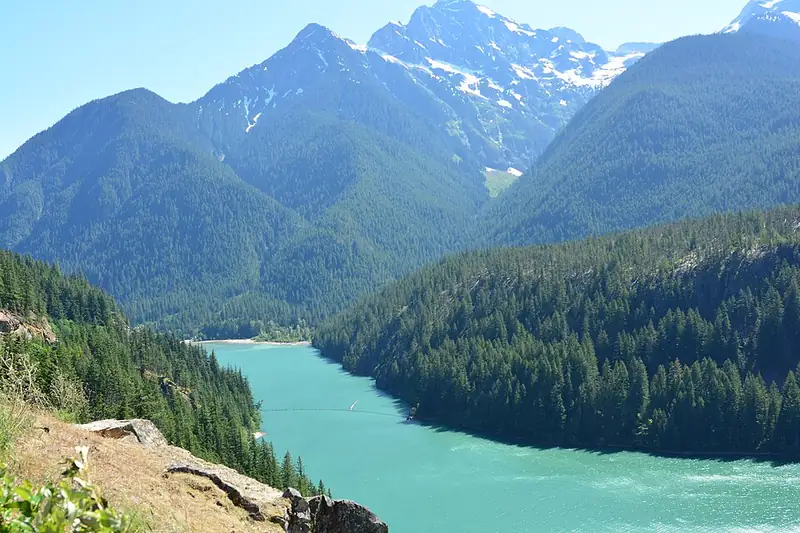
Diablo Lake turns green-blue in summer, and nobody dyes it. Glaciers up in the mountains grind rock into powder. Melting ice washes that powder down into the lake, and the grains are so fine they float instead of sinking. Floating grains bend the sunlight, and the water reads turquoise. The color is strongest on sunny days in July, August, and September.
Photo: Austin Post, USGS / Wikimedia Commons (public domain)
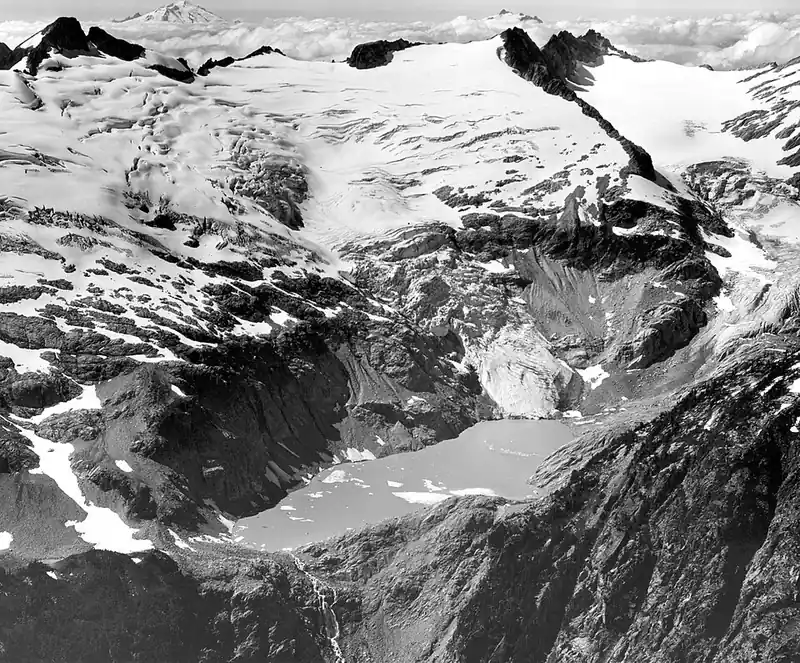
Scientists cannot measure all 300 glaciers here, so they picked four and check the same four every year: Noisy, Silver, Sandalee, and North Klawatti. What they find is that the ice is going. Glacier area in this park has dropped about 53 percent in the last hundred years. That ice is also drinking water. In a hot dry summer, melting glaciers supply 6 to 12 percent of the flow in the Skagit River.
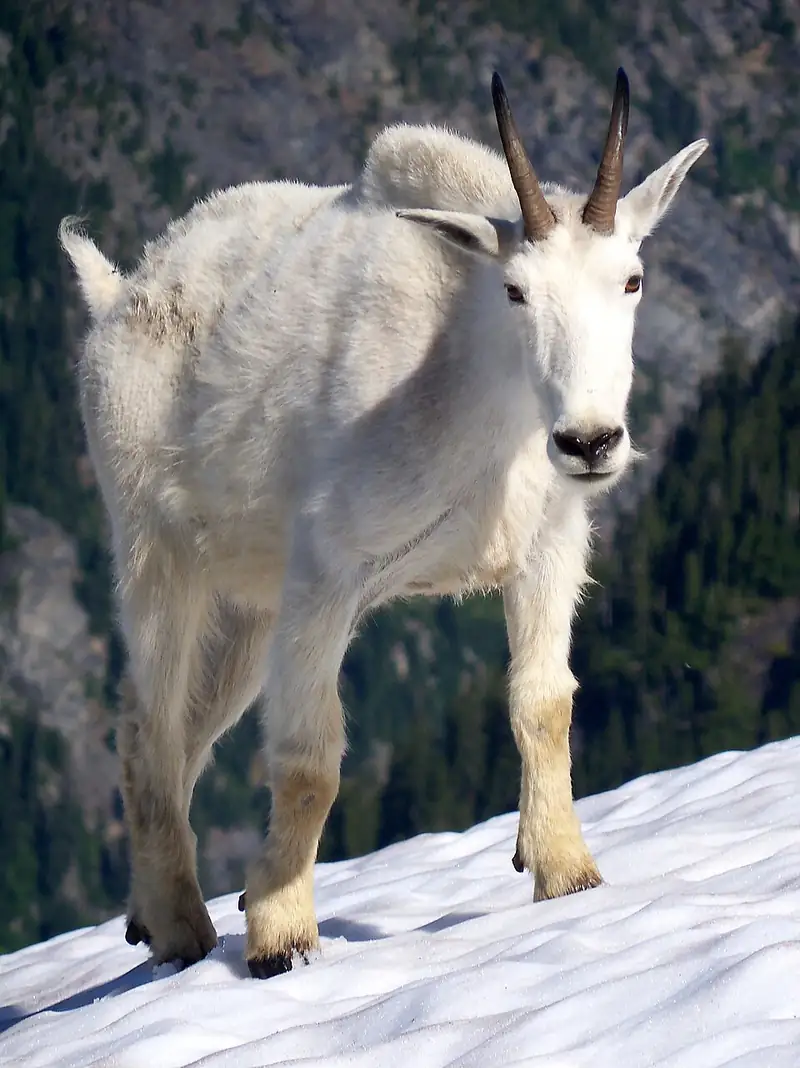
A mountain goat is not really a goat. The park says these animals belong with the antelopes. They live on cliffs where almost no predator will follow them, and they eat whatever grows up there, including moss and lichen. The tradeoff is a hard life. Of every 100 kids born, about 60 to 70 do not live through their first year.
Photo: Cathy Nowak, Oregon Department of Fish and Wildlife / Wikimedia Commons (CC BY-SA 2.0)
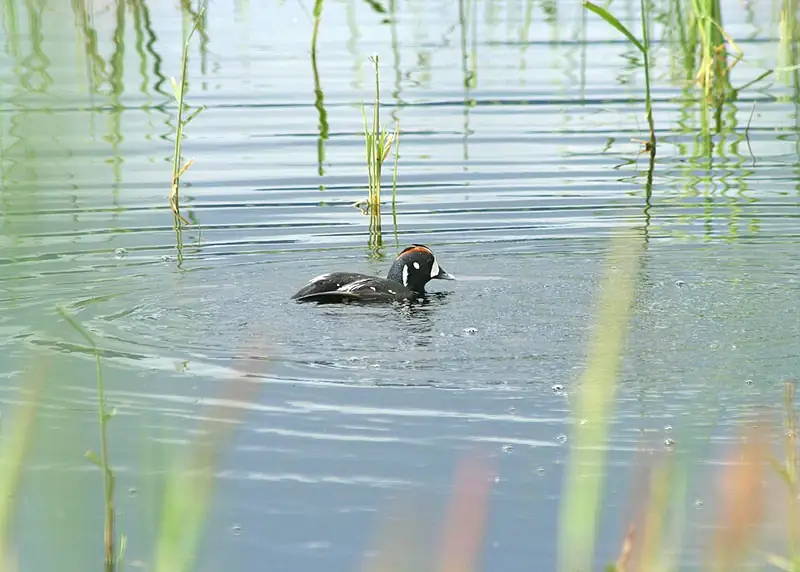
A harlequin duck lives two lives in one year. It winters on saltwater, and about 3,000 of them floated on Puget Sound each winter from 2012 to 2014. In spring it flies inland and nests beside fast, cold mountain streams like the ones in this park. There are not many. A survey counted roughly 400 breeding pairs in all of Washington, most of them in the Cascades and the Olympics.
Photo: NPS / Wikimedia Commons (public domain)
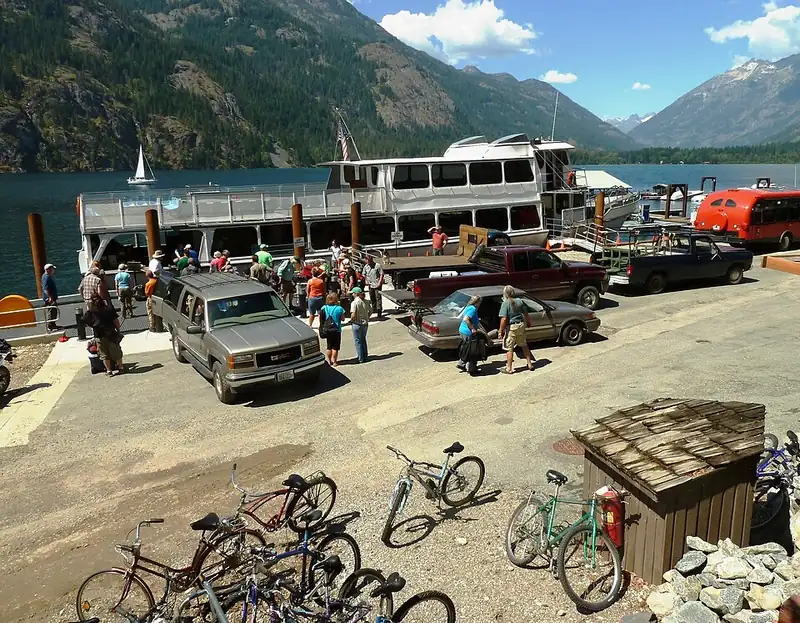
No road reaches Stehekin. You get there by boat, on foot, or by floatplane, and that has not changed. The community sits at the head of Lake Chelan, the third deepest lake in the United States. The name comes from a Salishan word meaning "the way through." There is no cell reception in the valley, so plan before you go.
Photo: Ron Clausen / Wikimedia Commons (CC BY-SA 4.0)
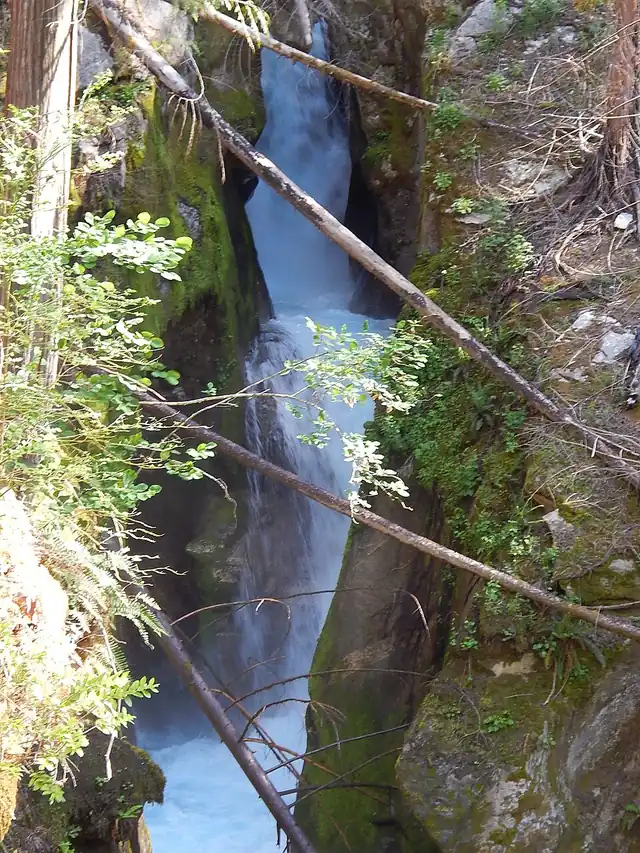
Newhalem started in 1918 as a camp for the crews building dams on the Skagit River. At its busiest, more than 300 workers and their families lived here and in Diablo, seven miles upstream. Fewer than 40 people live in the two towns now. Behind the Gorge Powerhouse, a quarter-mile trail climbs to Ladder Creek Falls, where colored lights come on over the water after dark.
Photo: Joe Mabel / Wikimedia Commons (CC BY-SA 4.0)
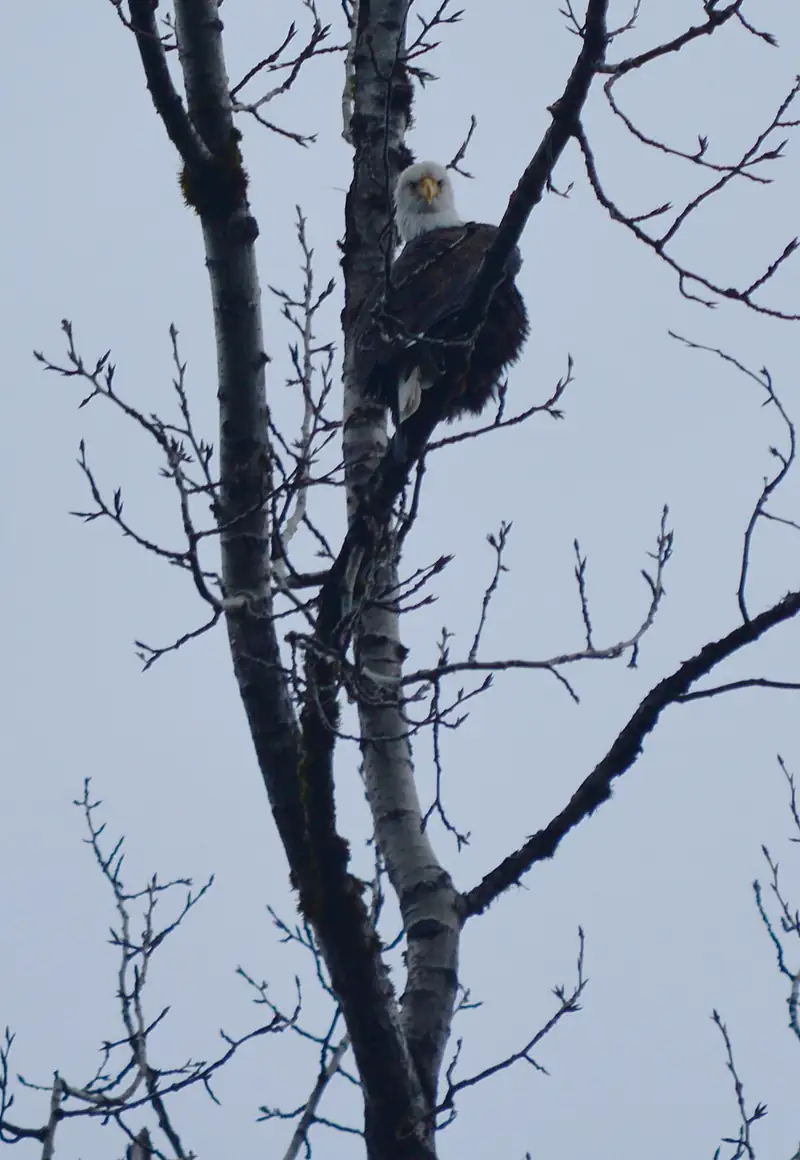
Salmon swim up the Skagit, lay their eggs, and die. Their bodies wash onto the gravel bars, and that is a winter meal. Bald eagles fly down from the north to eat it, and the Skagit Valley ends up holding one of the largest winter gatherings of bald eagles in the lower 48 states. People count them on Wednesdays from early December through February.