Yup’ik
A people
Background
Alaska's Commission on Native Languages lists Central Alaskan Yup'ik in two named forms, Yugtun and Cugtun, and counts an estimated 2,500 to 7,500 highly proficient speakers of them plus 100 to 300 proficient second-language speakers. The same list puts Yupigestun, the St Lawrence Island Yupik language, among the languages of the state, and the University of Alaska Fairbanks places Central Alaskan Yup'ik in the Yupik branch of the Eskimo-Aleut family, spoken in western and southwestern Alaska. A 2024 Alaska action plan for Native languages records the 2014 Official Languages Act as formally recognizing Yup'ik along with nineteen other languages. Lake Clark National Park and Preserve names Dena'ina, Yup'ik and Sugpiaq as the peoples whose forebears are today's residents of that region, and says Newhalen is primarily Yup'ik speaking while Iliamna has Dena'ina, Yup'ik, European American and people of other ethnic groups. A 2018 Kenai Fjords fact sheet places the Sugpiaq, also called Alutiiq or Pacific Yupik, among the southwest coastal people of the Yupik peoples.
Parks on its homelands
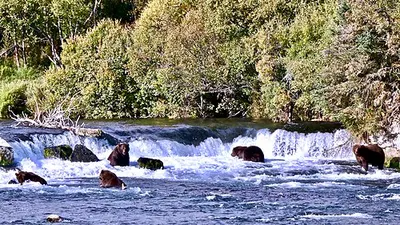
Katmai National Park and PreserveThe Naknek Native Village Council says Naknek, on the Naknek River, was known historically as a gathering place for Yup'ik and other Alaska Native peoples. Source
Sources
- https://www.nps.gov/lacl/learn/historyculture/people.htm
- https://cnsonline.alaska.gov/canl/Languages
- https://www.uaf.edu/academics/programs/bachelors/yupik-language-culture.php
- https://www.akleg.gov/basis/get_documents.asp?docid=13566
- https://www.nps.gov/kefj/learn/upload/KEFJ_Fact_Sheet_2018_508compliant_FINAL.pdf
Checked September 2026.