Western Shoshone
A people
Background
The Te-Moak Tribe of Western Shoshone calls its people descendants of a people once widespread whose name is Newe, and gives their country as southern Idaho, the central part of Nevada, portions of northwestern Utah and the Death Valley region of southern California. Before contact with white culture the Newe divided into small extended family groups who confined themselves to specific areas for hunting and gathering, and white settlers renamed them Shoshone during the 1820s. One of those groups was the Wells Band, whose members named themselves Kuiyudika after a desert plant used for food. Within that group the same tribe's page counts at least two other smaller groups, the Doyogadzu Newenee and the Waiha-Muta Newenee. Of the five peoples Sequoia and Kings Canyon name as the homelands the parks cover, the Western Shoshone are one.
Parks on its homelands
Kings Canyon National ParkThe Western Shoshone are counted by NPS among the five peoples whose homelands are Sequoia and Kings Canyon, and the park says the descendants of all five still steward and tend the land inside both boundaries. Source
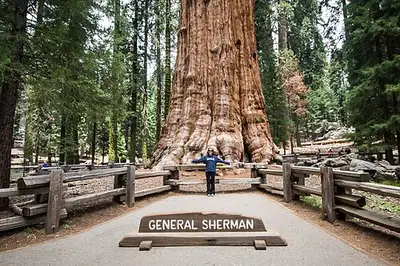 Sequoia National Park
The Big Pine Band of Owens Valley Paiute Shoshone Indians' own account of the seasonal round has ancestors taking pine nuts in the mountains in the fall and seeds, berries and roots on the valley floor in spring, with water the one variable nobody could predict. Source
Sources
- https://temoaktribe.com/history.shtml
- https://temoaktribe.com/wells.shtml
- https://www.nps.gov/seki/learn/historyculture/native-americans.htm
Checked September 2026.