Upper Tanana
A people
Background
The region NPS uses for the upper Tanana runs from the Wrangell Mountains north to Joseph Creek and from the Canadian border west to the confluence of the Goodpaster and Tanana rivers. Two Northern Athabascan languages are spoken in it, Upper Tanana and Tanacross. Before sustained western contact the people of the region were semi-nomadic hunter-gatherers who moved seasonally through the year within a defined territory for whitefish, caribou, moose, waterfowl and muskrats. The basic unit of social organization was a kinship-based local band that split up or joined another group in response to shifting resources. Leadership rested until the early twentieth century with what NPS calls rich men. By the 1930s settlements had developed at missions, trading posts and along transportation links, in part as a response to federal demands for mandatory school attendance. Most Upper Tanana communities are now outside the park. Today's villages are governed by elected village or tribal councils, which the federal government recognizes as tribal governments. The Tanana Chiefs Conference, the interior Alaska consortium that serves the region, names Upper Tanana as one of its six subregions and gives the subregion its own seat on the executive board.
Parks on its homelands
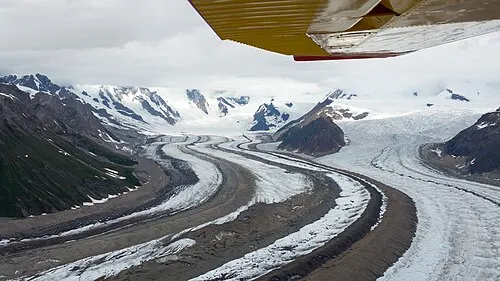
Wrangell-St. Elias National Park and PreserveThe Upper Chisana and Upper Nabesna band territory fell largely within the northern part of Wrangell-St. Elias, and seven regional bands have been identified in the upper Tanana area, each local band made up of 10 to 30 people. In 2002 the upper Tanana communities of Healy Lake, Dot Lake, Tanacross, Tetlin, and Northway were added to the list of rural communities with special access to hunt, fish, and gather inside park boundaries, a right that does not reach the preserve. Source
Affiliations
Tanana Chiefs Conference, Upper Tanana subregion
The subregion's member communities are Eagle, Dot Lake, Healy Lake, Northway, Tanacross, Tetlin and Tok. The Tanana Chiefs Conference describes itself as an Alaska Native non-profit corporation charged with advancing tribal self-determination and enhancing regional Native unity.
Sources
- https://www.nps.gov/articles/000/people-of-the-upper-tanana.htm
- https://www.nps.gov/wrst/learn/historyculture/human-history.htm
- https://www.tananachiefs.org/about/communities/
- https://www.tananachiefs.org/about/our-leadership/executive-board/
- https://www.tananachiefs.org/about/who-we-are/
Checked September 2026.