Upper Skagit Indian Tribe
A nation today
Background
The Tribe's government page says the Upper Skagit were an original signatory of the Treaty of Point Elliott, and that its people descend from a tribe with eleven separate villages on the Upper Skagit and Sauk rivers, whose ancestors eventually consolidated but for whom a separate reservation was not originally established, so that some members had to live on other reservations, primarily Swinomish. It was not until September 10, 1981 that the Upper Skagit Reservation was established, and the Tribe's main campuses are east of Sedro-Woolley, Washington, on Community Plaza Way. The Tribe's own front page puts its people in eleven villages from the foothills of the Cascades to the Puget Sound, and the Skagit River it names runs more than 125 miles from glaciers in the Canadian Cascade Mountains through old-growth forests and farmlands to Skagit Bay, one of the few rivers in western Washington that still sustain all five of their original wild salmon species, Chinook, chum, coho, pink and sockeye. The Natural Resources Department's mission is to manage, protect and enhance natural resources to support the Tribe's fishing, hunting and gathering rights, and its staff take part in salmon and shellfish negotiations, fisheries implementation, harvest monitoring and water management.
Visit and learn
Upper Skagit Indian Tribe's own site
Tribal lands have their own laws. Check the nation's site before you visit.
Parks on its homelands
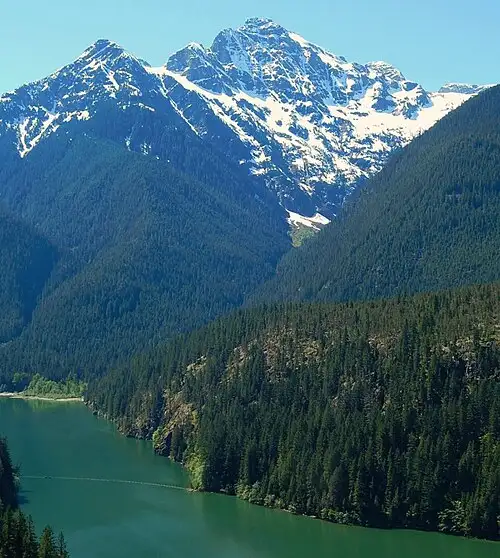
North Cascades National ParkUpper Skagit groups crossed the North Cascades regularly at Cascade Pass, which they called Stehekin, the way through. NPS says the Upper Skagit people reportedly cached canoes at the head of Lake Chelan for the trip southward down the lake. Source
Programs
Natural Resources Department
The department's stated job is to support the Tribe's fishing, hunting and gathering rights, providing technical and policy help for managing and conserving fish, shellfish and wildlife, which puts its staff in salmon and shellfish negotiations, fisheries implementation, harvest monitoring and water management. A Timberland Services unit runs forest development projects on tribal trust and Indian forest land, including invasive species control, brush cutting, thinning, nuisance animal mitigation, slash grinding and site preparation. Fisheries enforcement is at (360) 854-7057 and the fisheries hotline at (360) 854-7095.
Sources
- https://www.govinfo.gov/content/pkg/FR-2026-01-30/html/2026-01899.htm
- https://upperskagittribe-nsn.gov/
- https://upperskagittribe-nsn.gov/government/
- https://upperskagittribe-nsn.gov/who-we-are/
- https://upperskagittribe-nsn.gov/departments/natural-resources/
- https://www.nps.gov/noca/learn/historyculture/native-peoples.htm
Checked September 2026.