Tlingit
A people
Background
The Tlingit lived in villages on the coast of the Gulf of Alaska, and NPS holds that they came from somewhere east of the Coast Mountains in what is now northern British Columbia, traveled by river to the sea, and then spread north and west until they held the coast as far north as Cape Yakataga. Their own governments describe the Tlingit and Haida people as living as separate and distinct nations that steward lands and waters, practice art and science, and trade. An act of Congress in 1935 recognized the Tlingit and Haida people as a single tribe, 49 Stat 388. The Alaska Native Brotherhood, formed in 1912 to press Indigenous rights issues in Alaska, petitioned Congress for that recognition. The Central Council of the Tlingit and Haida Indian Tribes of Alaska that grew out of it is one of two federally recognized regional tribes in Alaska. NPS records that the Chilkoot and Chilkat Łingít managed the Chilkoot Trail before it became a park route, that the trail is now jointly managed by Klondike Gold Rush National Historical Park and Parks Canada, and that Tagish and Łingít have intermingled for centuries because of it.
Parks on its homelands
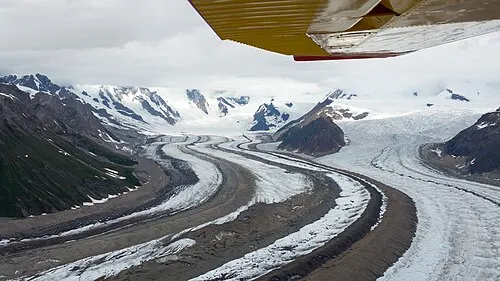
Wrangell-St. Elias National Park and PreserveExperts think the Tlingit came from somewhere east of the Coast Mountains in what is now northern British Columbia, travelled by river to the sea, then spread north and west until they held the coast as far north as Cape Yakataga. Most of the Tlingit who use today's park live around Yakutat Bay. Source
Affiliations
Chilkoot Trail joint management
The trail runs from the old townsite of Dyea, Alaska, to Bennett, British Columbia, and is jointly managed by Klondike Gold Rush National Historical Park in the United States and Parks Canada in the Yukon. NPS records that the Chilkoot and Chilkat Łingít managed the route before it became a park trail, and that Tagish and Łingít have intermingled for centuries because of it.
Sources
- https://tlingitandhaida.gov/about-us/
- https://www.nps.gov/wrst/learn/historyculture/human-history.htm
- https://tlingitandhaida.gov/about-us/history/
- https://www.nps.gov/klgo/learn/historyculture/tlingit-place-names.htm
Checked September 2026.