Taino
A people
Background
Virgin Islands National Park says humans first arrived in the Virgin Islands from South America about 2,500 to 3,000 years ago, and that around 1,000 to 1,300 years ago the islands experienced a population boom whose people are known as the Taino. They spoke an Arawakan language but developed a culture easily distinguishable from that of their mainland ancestors, who also spoke Arawakan, and the park records that Taino society was more complex than that of the people who had come to the region before them. They grew crops like cassava, potatoes and corn, built communal villages, used stone tools, and each village had a chieftain, known as a Cacique, who was the political leader of the community. The park spells the name without a diacritic on its main Indigenous peoples page and as Taíno on its Salt River Bay pages, and dates the most recent evidence of Taino settlement on St. John to the mid-1400s, years before the arrival of Christopher Columbus.
Parks on its homelands
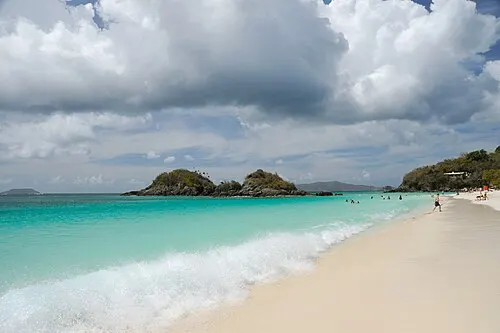
Virgin Islands National ParkNPS dates the first human arrivals in the Virgin Islands to about 2,500 to 3,000 years ago, coming from South America, and says the population boom 1,000 to 1,300 years ago marks the Taino, who spoke an Arawakan language and grew cassava, potatoes and corn. The most recent evidence of Taino settlement on St. John dates to the mid-1400s, years before Columbus arrived. Source
Sources
- https://www.nps.gov/viis/learn/historyculture/indigenous-peoples.htm
- https://www.nps.gov/places/taino-settlement.htm
Checked September 2026.