Susanville Indian Rancheria
A nation today
Background
Four peoples make up the Susanville Indian Rancheria: the Mountain Maidu, the Northern Paiute, the Pit River and the Washoe. The Rancheria elected to charter under the Indian Reorganization Act of 1934, and the Secretary of the Interior approved its first constitution and bylaws on March 3, 1969. The first thirty acres were bought on August 15, 1923 under the Landless and Homeless Act, which funded land purchases for landless and homeless California Indians, and more followed: 120 acres in 1978 under Public Law 95-459, 72 acres at the Sierra Army Depot in Herlong in 2000 under the Base Realignment and Closure Act, and 301 acres of Bureau of Land Management land transferred by Public Law 114-181, signed June 22, 2016. The Rancheria's site puts the current land base at 1,401.74 acres in trust and 287.62 acres in fee, and it counts roughly 1,500 enrolled members. Every tribal member sits in a General Council that sets the direction, and it elects a seven-member Tribal Business Council by secret ballot every three years, made up of a Chairperson, a Vice-Chairperson, a Secretary and Treasurer, and four council members, one each from District 1 and District 2 and two at large, with a seat held by a representative of the tribal trust property and another by a representative of Lassen County.
Visit and learn
Susanville Indian Rancheria's own site
Tribal lands have their own laws. Check the nation's site before you visit.
Parks on its homelands
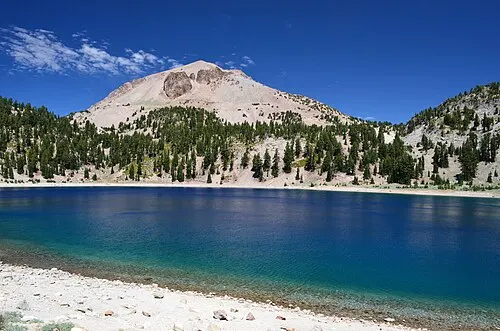
Lassen Volcanic National ParkThe Susanville Indian Rancheria was established in 1969 and is today a government of the Mountain Maidu, Northern Paiute, Pit River and Washoe peoples. Its tribal lands run 1,689 acres across Lassen and Plumas counties. Source
Programs
Natural Resources Department
The department's stated mission is to assess, protect and enhance the tribal and environmental resources of culture, language, land, air and water on the ancestral homelands of the tribes and bands of the Rancheria. Its Language Revitalization Program works on the Maidu, Paiute, Pit River and Washoe languages, records and distributes lullabies and traditional songs in those four languages, and teaches curriculum and language classes in Mountain Maidu. It also runs a Tribal Historic Preservation Office, administers more than twenty federal grants worth over $1,000,000 a year, and takes part in consultation with museums and federal agencies.
Sources
- https://www.govinfo.gov/content/pkg/FR-2026-01-30/html/2026-01899.htm
- https://sir-nsn.gov/about.html
- https://sir-nsn.gov/
Checked September 2026.