Sugpiaq (Alutiiq)
A people
Background
Kenai Fjords National Park calls the Sugpiaq, also known as Alutiiq, a maritime people who traditionally hunted and subsisted on the outer Kenai Peninsula coast, and a 2018 fact sheet from the same park adds a third name, Pacific Yupik, and places them among the southwest coastal people of the Yupik peoples of Alaska. The park says archaeological evidence indicates they have used the Kenai Fjords area for more than 1,000 years, and that their descendants live today in coastal fishing communities such as Nanwalek and Port Graham. The Port Graham Corporation was formed under the Alaska Native Settlement Act of 1971 to represent the Sugpiag people inhabiting the Kenai Fjords, and some of the coastline inside the park is owned by it. At Katmai, four year-round villages and many seasonally used camps stood in what is now the park before the 1912 eruption. Today people with historic ties to Katmai, mostly of Alutiiq descent, live in villages including South Naknek, Naknek, King Salmon, Kokhanok, Igiugig, Levelock, Egegik, Chignik and Perryville.
Parks on its homelands
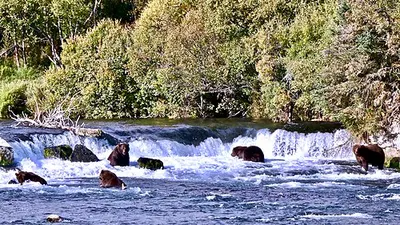
Katmai National Park and PreserveThe Alutiiq Museum says the Alutiiq and Sugpiaq have lived in the coastal parts of south-central Alaska for over 7,800 years, and that their traditional homelands run from Prince William Sound and the outer Kenai Peninsula through the Kodiak Archipelago to the Alaska Peninsula, where Katmai sits. The Museum publishes the language as Sugt’stun, also called Alutiit’stun. Source
 Kenai Fjords National Park
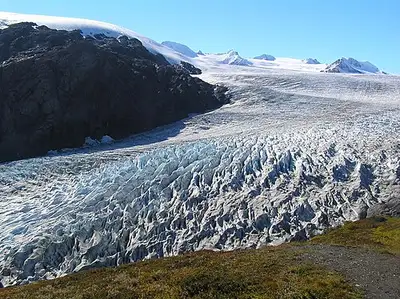
Archeological evidence puts Sugpiaq use of the Kenai Fjords coast at more than 1,000 years, and the Port Graham Corporation was formed under the Alaska Native Claims Settlement Act of 1971 to represent the Sugpiaq of the fjords. Some of the land along the park's coastline is owned by the Port Graham Corporation. Source
Sources
- https://www.nps.gov/kefj/learn/historyculture/people.htm
- https://www.nps.gov/kefj/learn/upload/KEFJ_Fact_Sheet_2018_508compliant_FINAL.pdf
- https://www.nps.gov/katm/learn/historyculture/cultures.htm
Checked September 2026.