Southern Paiute
A people
Background
Southern Paiute bands lived across northern Arizona, southeastern Nevada and southwestern Utah, and an NPS teaching guide counts fifteen of them. Five federally recognized governments hold Southern Paiute land and people today: the Paiute Indian Tribe of Utah, the Kaibab Band of Paiute Indians, the Moapa Band of Paiute Indians, the Las Vegas Tribe of Paiute Indians and the San Juan Southern Paiute Tribe of Arizona. The Southern Paiute language is unwritten and belongs to the Numic branch of the Uto-Aztecan family. Zion takes its name from the Southern Paiute word for the canyon at its heart, Mukuntuweap, which NPS renders as straight canyon. Zion dates their arrival in the region to about A.D. 1,100. Another NPS account puts them in the desert southwest from at least A.D. 1100 and describes spring floodplain gardening, with reservoirs and irrigation ditches for corn, squash, melons, gourds, sunflowers, beans and wheat. Seasonal movement followed, up to meadows and cool forests above 10,000 feet.
Parks on its homelands
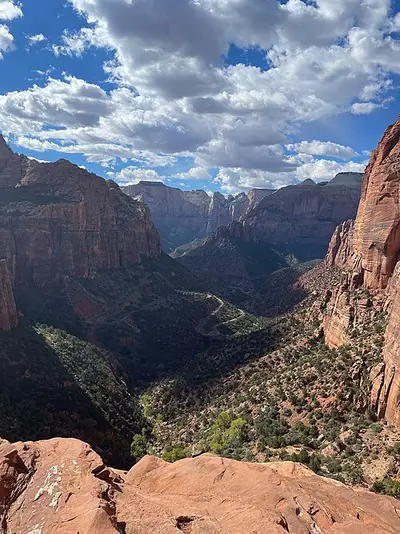
Zion National ParkThe Southern Paiute called Zion Canyon Mukuntuweap, straight canyon, and NPS dates their move into the region to about AD 1,100, when the Virgin Branch Puebloan and Fremont groups left. President Taft set aside about 16,000 acres as Mukuntuweap National Monument on July 31, 1909. Source
Affiliations
Southern Paiute Consortium
An entity created in 1993 by and for its member tribes, the Kaibab Band of Paiute Indians and the Paiute Indian Tribe of Utah, to improve their participation in the Glen Canyon Dam Adaptive Management Program. The Kaibab Band publishes the Consortium's page, which carries information on the relationship of Southern Paiutes to the Colorado River and the surrounding region, and on Southern Paiute concerns about the dam's operations.
Sources
- https://nps.gov/common/uploads/teachers/lessonplans/so-paiute-cur-guide-6-9.pdf
- https://www.nps.gov/articles/about-the-southern-paiute.htm
- https://www.govinfo.gov/content/pkg/FR-2026-01-30/html/2026-01899.htm
- https://www.nps.gov/zion/learn/historyculture/index.htm
Checked September 2026.