Shawnee
A people
Background
Many Shawnee allied with the British during the American Revolution. The war of 1774 in western Virginia ended at the Battle of Point Pleasant on October 10, with Shawnee fighters under Cornstalk forced to retreat. Shawnee war chief Tecumseh was building political and military unity among the tribes when he was killed at the Battle of the Thames on October 5, 1813. Cuyahoga Valley's account of the Ohio Country calls that the breaking of the back of unified tribal resistance in the region. The Treaty of Fort Meigs in 1817 set up Shawnee reservations in three locations in Ohio. In 1832 the United States forced the Shawnee off those reservations and marched them to Kansas, with journals kept by the men overseeing the removals documenting the hardship. The same park history describes the country as coveted by Europeans for its land and by Native Americans for its refuge, and records that treaty after treaty added pressure for westward migration. Three federally recognized governments speak for the Shawnee people today, and the Miami Tribe's own history places the Shawnee among the Great Lakes peoples who ended up together in northeastern Oklahoma.
Parks on its homelands
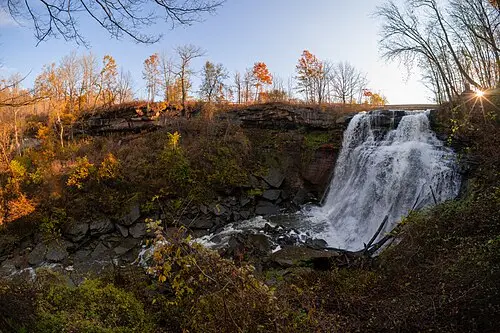
Cuyahoga Valley National ParkThree Ohio reservations for the Shawnee were set up by the 1817 Treaty of Fort Meigs. In 1832 the US forced the Shawnee off those reservations and marched them west to Kansas. Source
Sources
- https://www.nps.gov/articles/000/american-revolution-in-the-ohio-country.htm
- https://www.nps.gov/cuva/planyourvisit/the-land-of-refuge.htm
- https://miamination.com/about-us/
Checked September 2026.