Salish (Séliš)
A people
Background
In September 1805, in the valley now called Ross's Hole east of Sula, Montana, the Salish met Lewis and Clark. NPS writes that the Salish, whom Lewis and Clark called Flatheads, prefer to be called Salish. The Bitterroot Salish are one of three tribes of the Flathead Indian Reservation, named as such by the Confederated Salish and Kootenai Tribes, and their territory covered all of western Montana, reaching into parts of Idaho, British Columbia, and Wyoming. The Hellgate Treaty of 1855 set aside the reservation, which covers about 1.3 million acres today.
Visit and learn
Three Chiefs Culture Center
The Salish are one of the three peoples the center serves, alongside the Pend d'Oreille and the Kootenai. Owned and run by the Confederated Salish and Kootenai Tribes and formerly called The People's Center, it holds museum exhibits, gives presentations and classes, and keeps a shop for Native-made work.
Native America Speaks
Talks at park campgrounds and lodges each summer come from members of the Confederated Salish and Kootenai Tribes and the Blackfeet Nation.
Tribal lands have their own laws. Check the nation's site before you visit.
Parks on its homelands
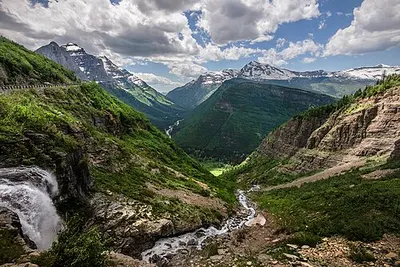
Glacier National ParkThe Bitterroot Salish, the Salish people of the confederation, made their home in the Bitterroot Valley and ranged west of the Continental Divide. Flathead is a misnomer, put there when Lewis and Clark took the Bitterroot Salish for west coast Flatheads, and Salish and Kootenai groups used passes in what is now Glacier National Park to cross east and hunt buffalo on the plains. Source
Programs
Séliš-Ql̓ispé Culture Committee
The committee the Confederated Salish and Kootenai Tribes formed in 1974 and 1975 at the urging of elders, working to preserve and carry on the culture, language, and history of the Séliš and Ql̓ispé people, with publications and presentations.
Séliš-Ql̓ispé language program
A three-level curriculum and a Salish immersion program with full-time apprentices, plus books, apps, and card sets for learners.
Sources
Checked September 2026.