Nunamiut
A people
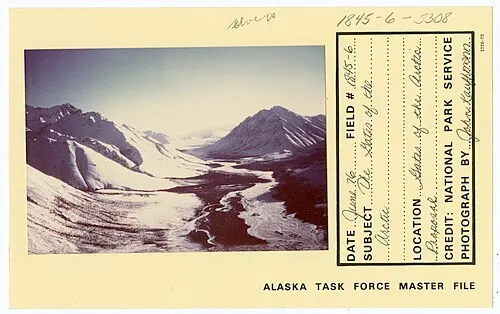
Background
Caribou is by far the single most important food source for the Nunamiut, the inland mountain people of the Brooks Range, where for other peoples caribou is one part of a diet that also includes other game, fish and marine mammals. Caribou has supplied the Nunamiut with more than food. Its skin has made parkas, pants, boots, socks and mittens, and has served for blankets and tents, and the sinew from its tendons has been made into nets and thread. Gates of the Arctic National Park and Preserve names three peoples whose homelands it partly encompasses, the Nunamiut, the Iñupiat peoples of the Kobuk and Noatak rivers, and the Koyukon. It sets all three in a northern Alaska country where people and caribou have lived in a close and intricate relationship for at least 11,000 years. A second park page says the descendants of the Inupiaq and Athabascan people who travelled the central Brooks Range now live in small communities nearby and continue to use that knowledge to hunt and gather in the park and preserve.
Parks on its homelands
Gates of the Arctic National Park and PreserveNunamiut hunters set lines of iñuksuit, stones stood on end and dressed with willow and cloth to look human, in two gradually converging rows sometimes five miles long, then walked the caribou between them into a lake, a river, or a willow corral. Communal drives like that ended before 1900, and a shortage of bullets in 1944 brought the lake hunt back for one season, with men in kayaks and homemade spears intercepting swimming caribou. Since the 1950s the Nunamiut have lived at Anaktuvuk Pass, a village on a major caribou pathway. Source
Sources
- https://www.nps.gov/articles/000/nunamiut-the-caribou-people.htm
- https://www.nps.gov/gaar/learn/historyculture/people.htm
- https://www.nps.gov/articles/aps-v5-i1-c15.htm
Checked September 2026.