Native Hawaiians (Kānaka Maoli)
A people
Background
Kānaka Maoli is the name the Office of Hawaiian Affairs uses for the people it exists to serve, and the agency's own statement of its foundations ends by saying these are things that define us as a people. OHA's strategic plan, Mana i Mauli Ola, runs fifteen years on three foundations, ʻohana for family, moʻomeheu for culture and ʻāina for land and water, which the agency weaves into four directions of work, education, health, housing and economics, with the stated aim of a thriving and abundant lāhui. A single people works through a public body of its own rather than through separate nations, and Hawaiʻi Volcanoes National Park has put traditional Hawaiian place names back on the maps and signs of the park alongside the English ones.
Parks on its homelands
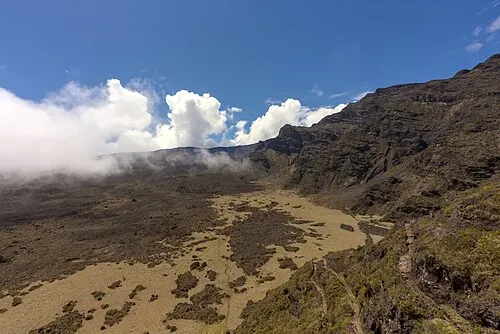
Haleakalā National ParkPolynesians from what is now the Marquesas Islands settled the Hawaiian Islands between 1000 and 1200 AD, crossing more than 2,000 miles of open ocean in double-hulled canoes. Before contact, Hawaiian rulers divided Maui into twelve land districts, or moku, and eight of those cross inside Haleakalā National Park. Source
 Hawaiʻi Volcanoes National Park
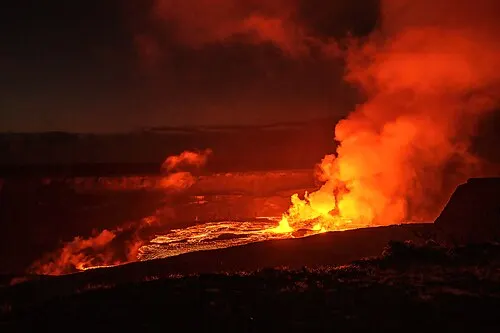
NPS has put Hawaiian place names back on the maps and signs at Hawaiʻi Volcanoes: the Kīlauea caldera is Kaluapele, the summit area Uēkahuna, Waldron Ledge Kūpinaʻi Pali, and Sulphur Banks Haʻakulamanu. Source
Sources
Checked September 2026.