Miami
A people
Background
The Miami Tribe of Oklahoma gives its people a name in their own language, myaamia, and translates it as the downstream people. Its own history places the Myaamia homelands in the Great Lakes region, inside the boundaries of Indiana, Ohio, Illinois, lower Michigan and lower Wisconsin, and describes a living taken from the wetlands, prairies, woodlands and river bottomlands of the Wabash valley. Corn grew in the long summers, and deer, bison and elk were hunted east and west of the river. Indiana Dunes records the Miami as the principal Indigenous people near southern Lake Michigan by the late 1600s. Iroquois expansion pushed them south along the Wabash and Maumee in the early 1700s, and Miami people still live in Indiana cities including Peru, Fort Wayne and South Bend. At what became Fort Recovery in 1791, Miami leaders Little Turtle and Blue Jacket turned back General Arthur St. Clair's army. In 1794 a federation that included the Miami lost to General Anthony Wayne at Fallen Timbers. The Tribe traces its treaty period from the Greenville Treaty of 1795 to the Indian Removal Act of 1830, the Treaty of 1840, and October 1846. About 500 ancestors were forced at gunpoint onto canal boats in eastern Indiana that month, and arrived in Indian Territory as fewer than 100 adults. The Nation numbers more than 7,000 citizens today, concentrated in northeastern Oklahoma, eastern Kansas and northern Indiana, and it maintains a 1,400-acre land base.
Parks on its homelands
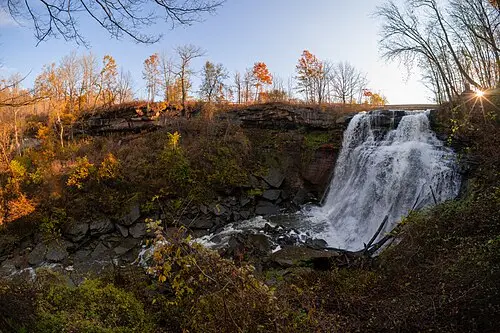
Cuyahoga Valley National ParkIn 1791 Miami, Shawnee, Delaware and Potawatomi warriors under Little Turtle routed General Arthur St. Clair's army at what became Fort Recovery, and three years later the US Army beat a federation of Shawnee, Miami, Wyandot and other nations at Fallen Timbers. Source
 Indiana Dunes National Park
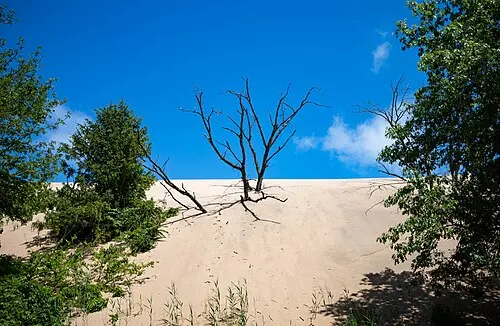
By the late 1600s NPS records the Miami as the principal Indigenous people near southern Lake Michigan, the country these dunes sit in, including the St. Joseph River valley. Iroquois expansion in the early 1700s pushed them south along the Wabash and Maumee, and Miami people still live in Indiana cities including Peru, Fort Wayne and South Bend. Source
Sources
- https://www.nps.gov/indu/learn/historyculture/indigenous-peoples-and-early-settlement.htm
- https://miamination.com/about-us/
- https://www.nps.gov/articles/000/american-revolution-in-the-ohio-country.htm
- https://www.nps.gov/cuva/planyourvisit/the-land-of-refuge.htm
Checked September 2026.