Late Archaic and Early Woodland peoples
An ancient culture
Background
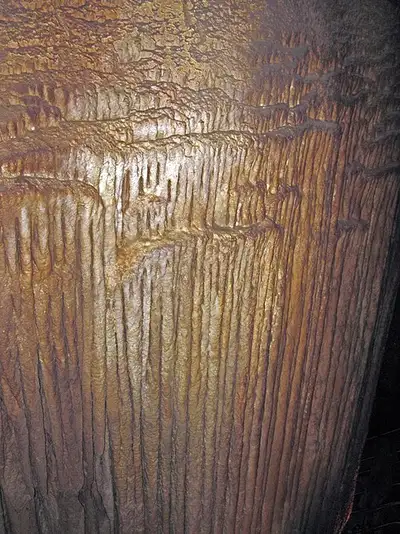
Mammoth Cave National Park describes prehistoric people from the Late Archaic and Early Woodland period as having inhabited the forests and plains of Kentucky, with a focus on the river valleys and their abundant resources, and dates the human history of its area to 12,000 years ago. Today's modern tribal organizations, the park says, are composed of Native Americans that have indigenous ties to the Southeastern Woodlands that include Kentucky and the Mammoth Cave area. By 1200 BCE these people were mining gypsum, mirabilite, epsomite and other related minerals inside the cave, scraping the relatively soft mineral crusts off the walls with mussel shells into containers they carried with them, and lighting their way with torches made from river cane. The mining and exploration of the cave declined after 200 BCE, and the park notes that the minerals are highly soluble and do not preserve outside the dry cave environment, which is why there is no direct evidence of what they were used for.
Parks on its homelands
Mammoth Cave National ParkThe park dates the Late Archaic and Early Woodland peoples' exploration of Mammoth Cave to between about 5,000 and 4,000 years ago, in a landscape people had used for some 12,000 years. They mined gypsum, mirabilite and epsomite from the cave by 1200 BCE, scraping the crusts off the walls with mussel shells. Source
Sources
Checked September 2026.