Bois Forte Band of Chippewa
A people
Background
The Bois Forte reservation sits in extreme northern Minnesota, about 45 miles south of the Canadian border, in three sectors: Nett Lake, Vermilion and Deer Creek. The largest is around Nett Lake in St. Louis and Koochiching counties, where the Band's history page says half the sector is wetland and calls it the largest producer of wild rice in the United States. The Band's mission statement says it will use available resources to promote the well-being of its members, prepare for the future by being a wise steward of its resources, and preserve its sovereignty, cultural identity and heritage. Its tribal council is organised by district, with a chairperson and a vice-chairperson who also holds the District II seat.
Visit and learn
Bois Forte Band of Chippewa's own site
Tribal lands have their own laws. Check the nation's site before you visit.
Parks on its homelands
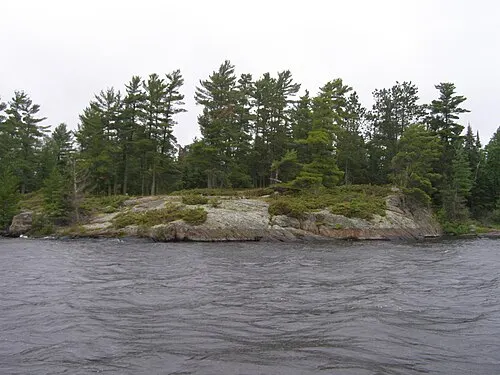
Voyageurs National ParkThe Bois Forte numbered roughly 600 to 1,000 people from the mid-1800s onward, and about 100 to 200 of them, divided into four bands, lived inside what is now Voyageurs National Park from at least the 1880s until 1910. Inside the park is a chain of four major lakes that American Indians have used for about 9,000 years. Source
Programs
Natural Resources and Land Management
The Band department that carries the reservation's conservation, ecological resources, environmental services, forestry, and leasing and land management work, split into Conservation, Ecological Resources, Environmental Services, Forestry, and Leasing and Land Management, with each area published as its own page on the Band's site.
Sources
- https://www.govinfo.gov/content/pkg/FR-2026-01-30/html/2026-01899.htm
- https://boisforte.com/about/history/
- https://boisforte.com/about/our-mission/
- https://boisforte.com/departments/tribal-council/
Checked September 2026.