Absentee Shawnee Tribe
A nation today
Background
The Shawnee are a Woodland people who speak an Algonquian dialect, and they share a language family with the Ojibwe, Sac and Fox, and Kickapoo. The Tribe's own history counts three federally recognized tribes of the Shawnee people: Absentee-Shawnee, Shawnee and Eastern Shawnee. Treaties in the late 1700s and through the 1800s established the Shawnee as a large population with land holdings in the state of Ohio. The two Absentee Shawnee bands were organized as one tribe under the Oklahoma Indian Welfare Act of 1936, and the Tribe shares that former reservation area with the Citizen Band of Potawatomi. In 1964 about 33 acres of federal land was transferred to the Tribe in Shawnee, Oklahoma. Government has a legislative and executive branch and a judicial branch. The legislative and executive branch is five elected members appointed by the general tribal membership: a Governor, Lieutenant Governor, Secretary, Treasurer and Representative. Self-governance arrived through the Indian Self-Determination and Education Assistance Act of 1975. To get it, a tribe had to complete a five-year demonstration project showing it could manage federal funds and administer the associated programs.
Visit and learn
Absentee Shawnee Tribe's own site
Tribal lands have their own laws. Check the nation's site before you visit.
Parks on its homelands
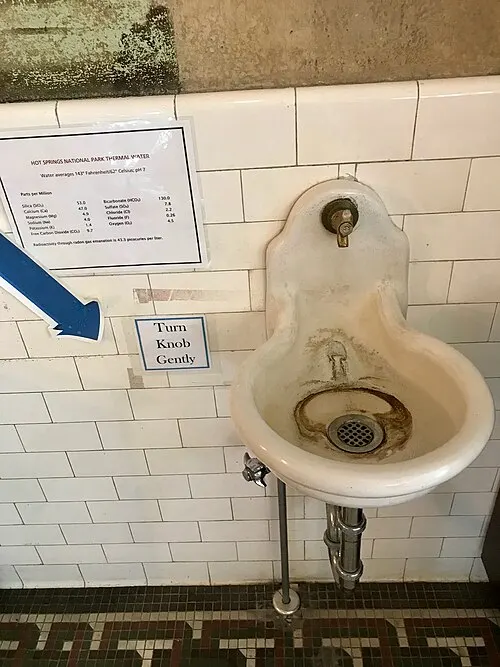
Hot Springs National ParkSome Shawnee groups migrated west into Missouri and Arkansas in the late 1700s to avoid colonial encroachment, the Absentee Shawnee Tribe's own history says, and the tribe today is organized from two bands, the Big Jim Band near Little Axe and the White Turkey Band in Pottawatomie County, Oklahoma. Source
 Mammoth Cave National Park
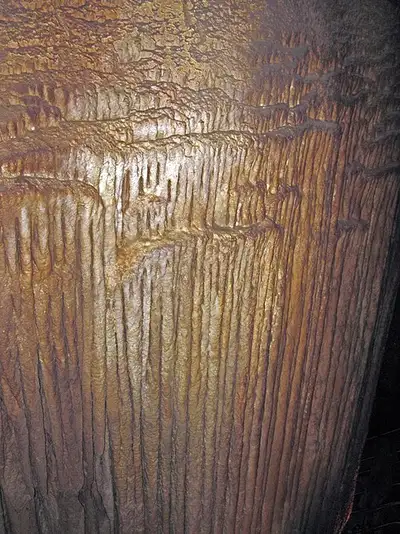
The Absentee Shawnee Tribe's own history places its people in the Shawnee homeland of Ohio, Indiana, Illinois, Kentucky, Tennessee and Pennsylvania, and calls the Shawnee a Woodland people. The tribe's government complex is in Shawnee, Oklahoma, and Kentucky, the state Mammoth Cave is in, is on that homeland list. Source
 New River Gorge National Park and Preserve
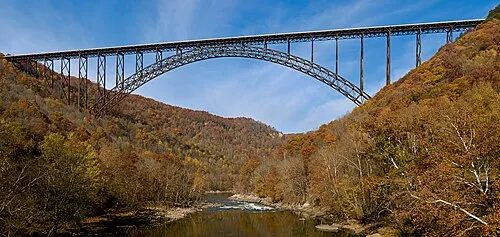
The name comes from the tribe's groups not being present at the 1854 treaty for a Kansas reservation, so they moved to Indian Territory instead. The tribe's own history says the US removed the remaining Ohio Valley Shawnee to Kansas in 1832. Source
Programs
Historic Preservation Department
The department's stated aim is to maintain, preserve and protect the Tribe's traditions, language and homelands, and its staff teaches tribal members, employees and other visitors about Absentee Shawnee identity through lectures, discussions, workshops, classes and demonstrations. It operates three programs: the Tribal Historic Preservation Office, the Absentee Shawnee Tribal Library and the Absentee Shawnee Gift Shop.
Language and Culture Department
Based at 2025 S. Gordon Cooper Drive in Shawnee, Oklahoma, the department publishes the Tribe's own language resources, a lexicon, online lessons and a language assessment survey, and the Tribe's site lists it as the point of contact for Absentee Shawnee language work.
Sources
- https://www.govinfo.gov/content/pkg/FR-2026-01-30/html/2026-01899.htm
- https://www.astribe.com/about-us
- https://www.astribe.com/historic-preservation
- https://www.astribe.com/language
- https://www.astribe.com/self-governance
Checked September 2026.