Great Sand Dunes National Park and Preserve Flashcards
Photo cards, one fact each. Big and Little made them.
Card 1 of 6
Photo by Great Sand Dunes National Park / Wikimedia Commons · CC BY 2.0
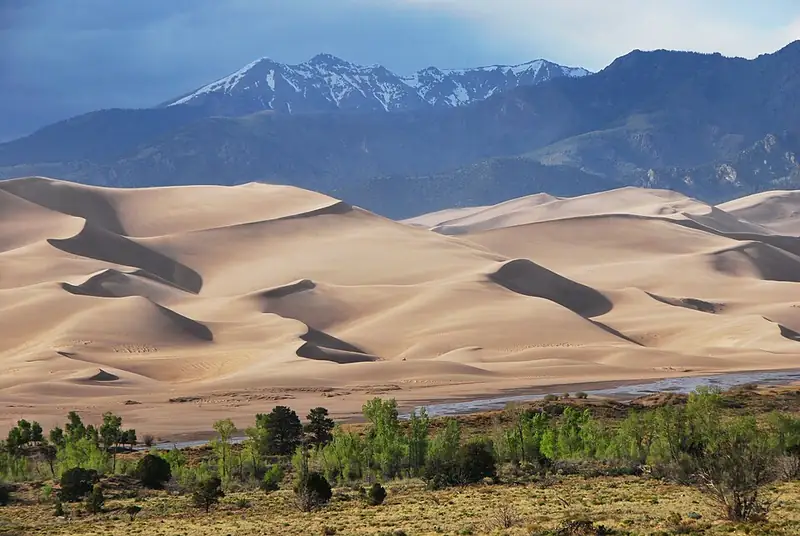
High Dune sits on the first ridge and rises 699 feet from its base. Most families climb this one: about 2.5 miles round-trip, straight up loose sand with no trail.
Photo by Great Sand Dunes National Park and Preserve / Wikimedia Commons · public domain
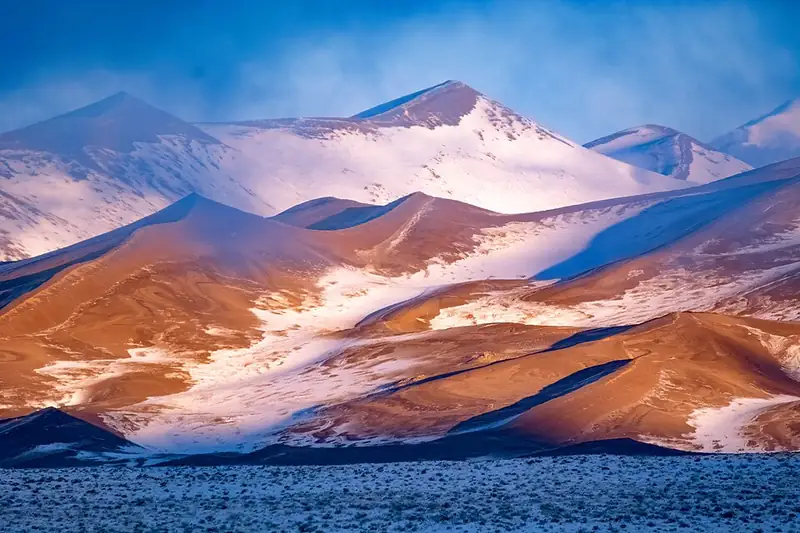
Star Dune is tied with Hidden Dune as the tallest dune in North America at 741 feet from base to summit. Reaching Star Dune is about a 6-mile round trip through soft sand.
Photo by Great Sand Dunes National Park and Preserve / Wikimedia Commons · public domain
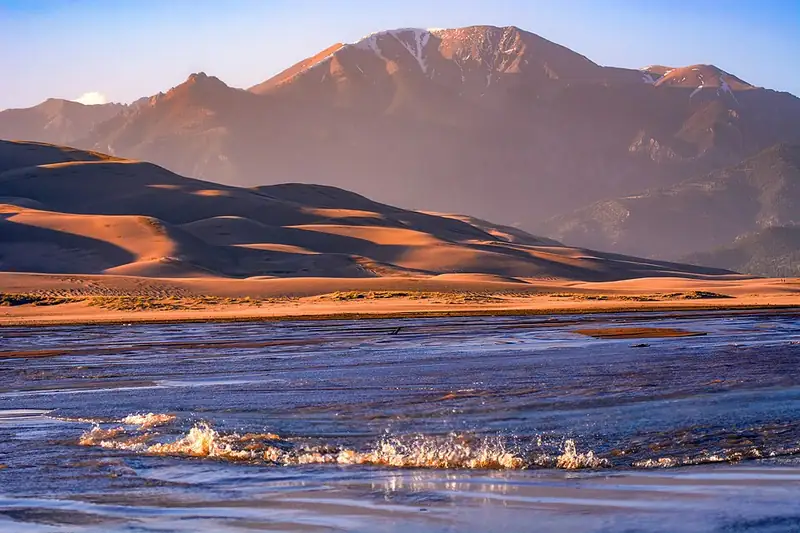
Medano Creek runs along the east edge of the dunefield and moves in surge flow: sand dams build and break upstream, sending waves down across the sand. Late May and early June are the best chance to see it.
Photo by Great Sand Dunes National Park / Wikimedia Commons · CC BY 2.0
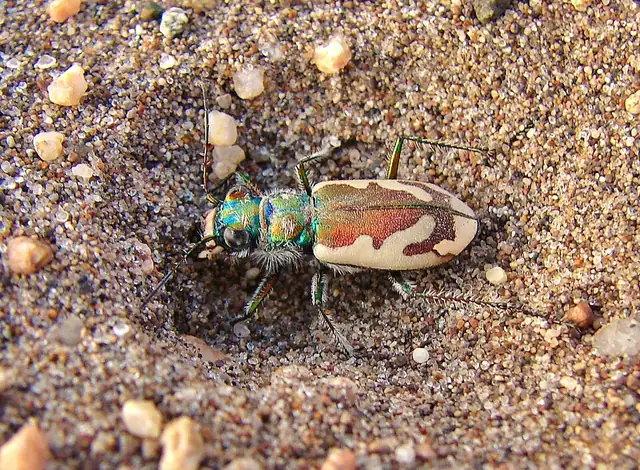
The Great Sand Dunes tiger beetle, Cicindela theatina, is endemic to this dunefield. It has a violin-like pattern on its back and an iridescent green-blue head, and both adults and larvae hunt other insects on the sand.
Photo by Great Sand Dunes National Park / Wikimedia Commons · public domain
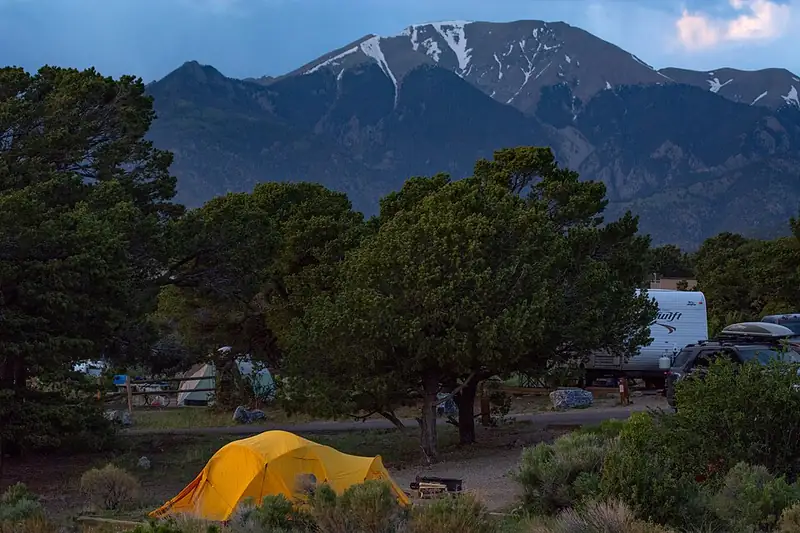
Piñon Flats is the only campground inside the park, set in piñon-juniper above the dunefield with a view across the sand to the Sangre de Cristo Mountains. It is open about April to October and reservable on Recreation.gov.
Photo by Great Sand Dunes National Park and Preserve / Wikimedia Commons · public domain
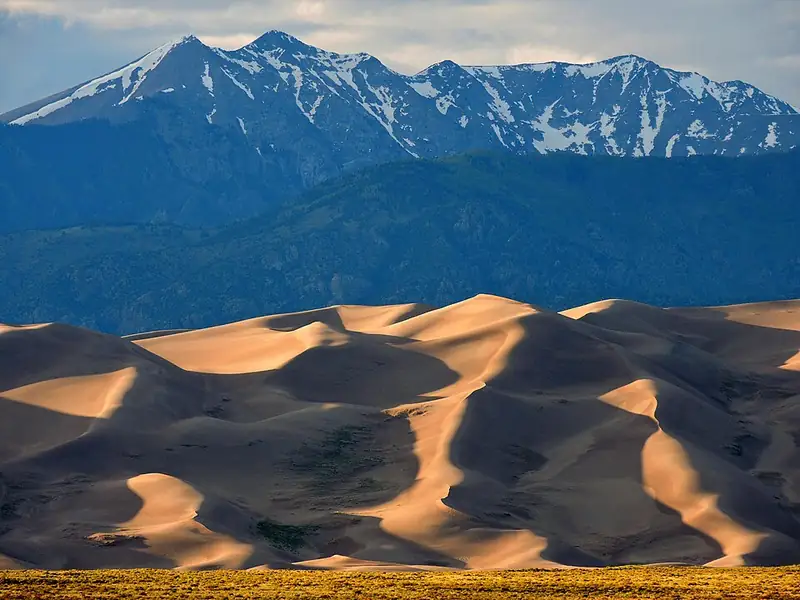
The dunes are made of sand from the San Luis Valley, pushed by prevailing southwest winds toward a bend in the Sangre de Cristo Mountains. Opposing storm winds blow back, so the sand stacks up instead of marching into the range.