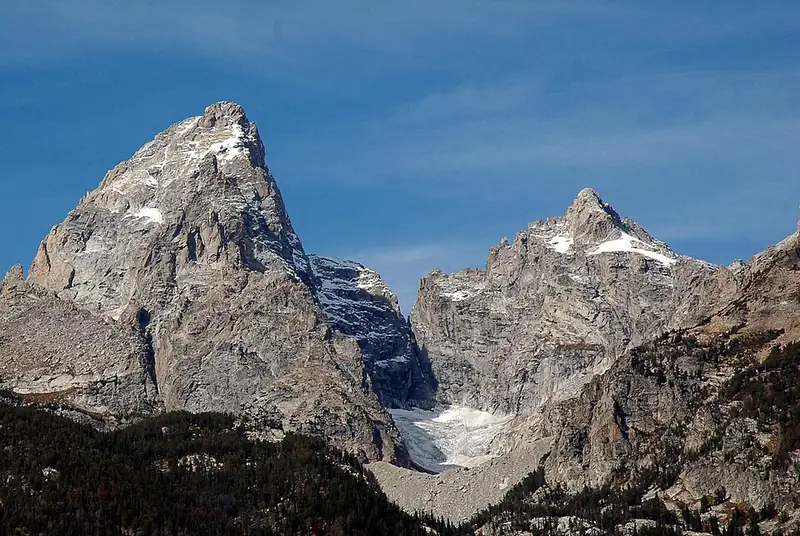
The Teton fault moves about 10 feet in a typical earthquake: two to three feet up on the mountain side, four to six feet down on the valley side. The valley has dropped about twice as far as the peaks have risen. The low ridges below the summits are not foothills. They are moraines.
Photo: G. Edward Johnson / Wikimedia Commons (CC BY 3.0)
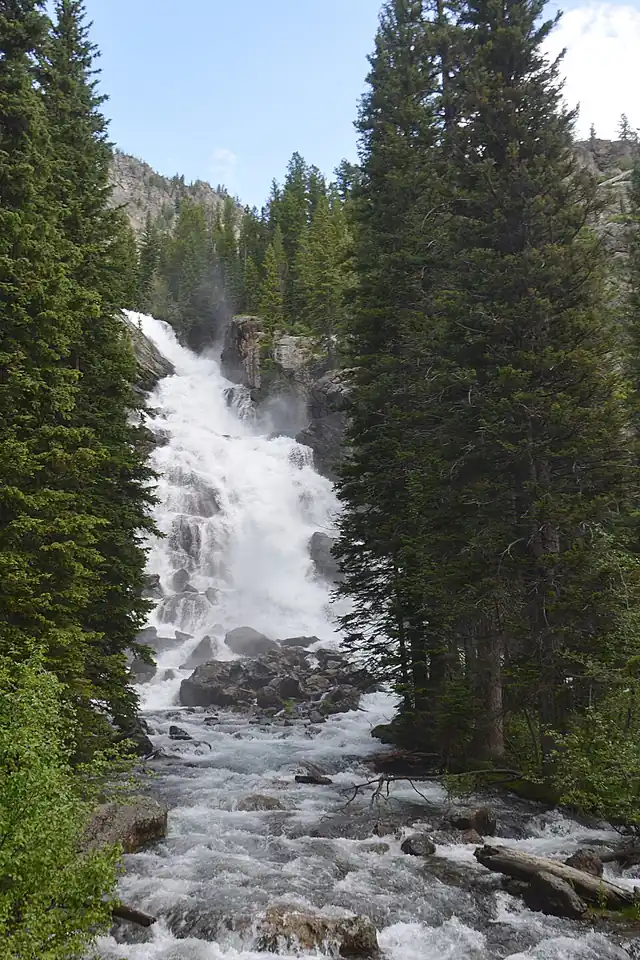
Hidden Falls is a 100-foot cascade on Cascade Creek. It is 4.9 miles round trip from the Jenny Lake trailhead, or one mile round trip from the west boat dock. The boat is what puts it in reach of short legs.
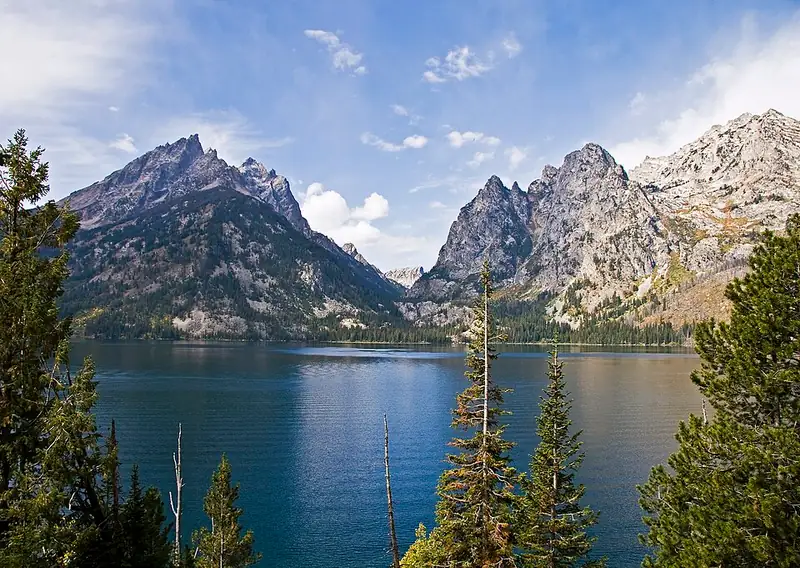
Jenny Lake is 256 feet deep at its deepest point. Glaciers gouged the valley floor here and left ridges of rock called moraines that hold the water in. The park names Jenny, Taggart and Jackson as lakes ringed this way.
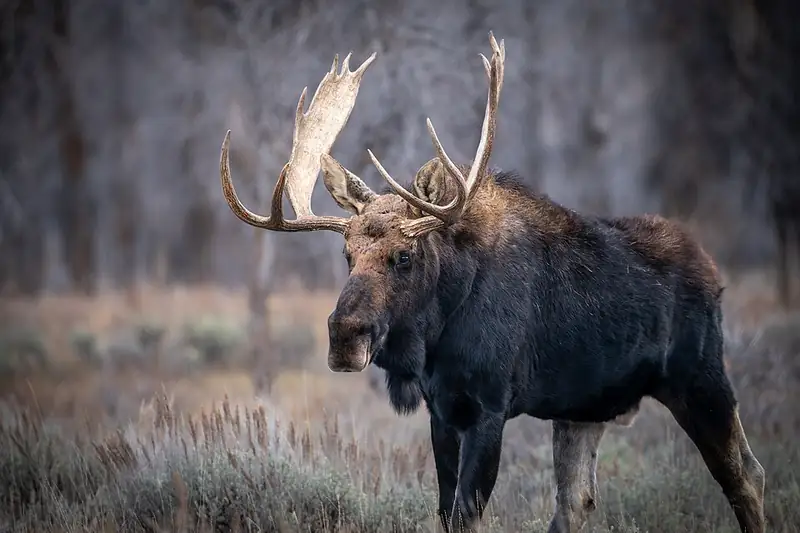
A bull moose can weigh nearly 1,000 pounds and stand over seven feet at the shoulder. Its main food is willow leaves and twigs, which is why the park points people to Oxbow Bend and the Snake River. Stay at least 25 yards away.
Photo: G. Edward Johnson / Wikimedia Commons (CC BY 3.0)
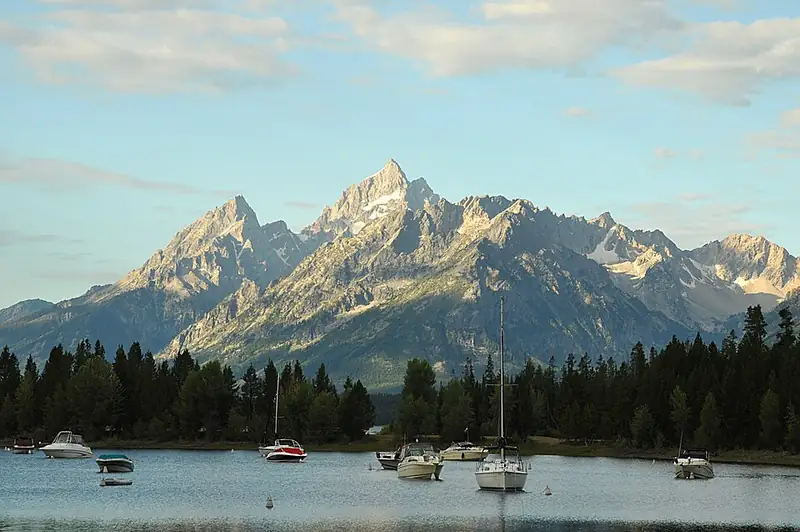
Jackson Lake is the park's largest, and the National Park Service calls it a natural lake raised by a 39-foot tall man-made dam. Reclamation finished a log-crib dam at the lake outlet in 1907, it failed in 1910, and the replacement was completed in 1916. It was rebuilt for earthquake safety between 1987 and 1989.
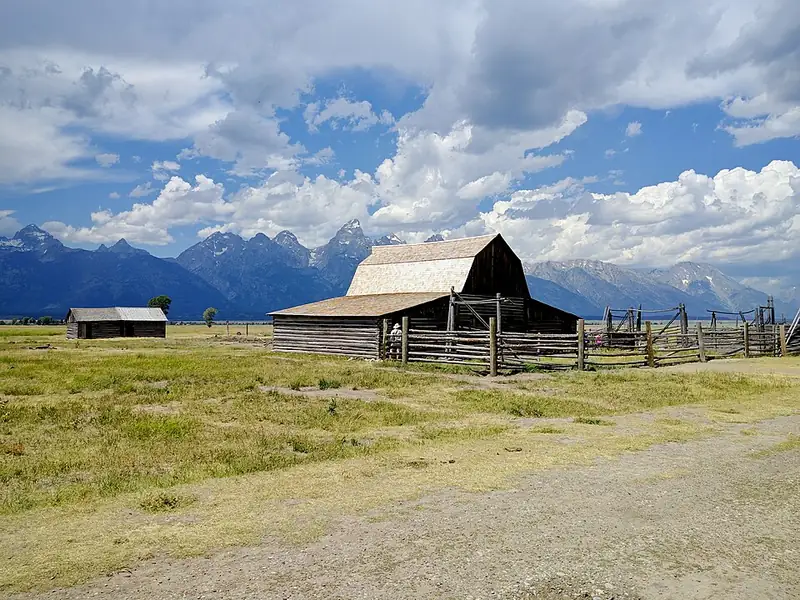
Latter-day Saint families homesteaded east of Blacktail Butte from the 1890s and built a community called Grovont. Brothers John and Thomas Alma Moulton raised barns on neighbouring claims. The district joined the National Register in 1997.
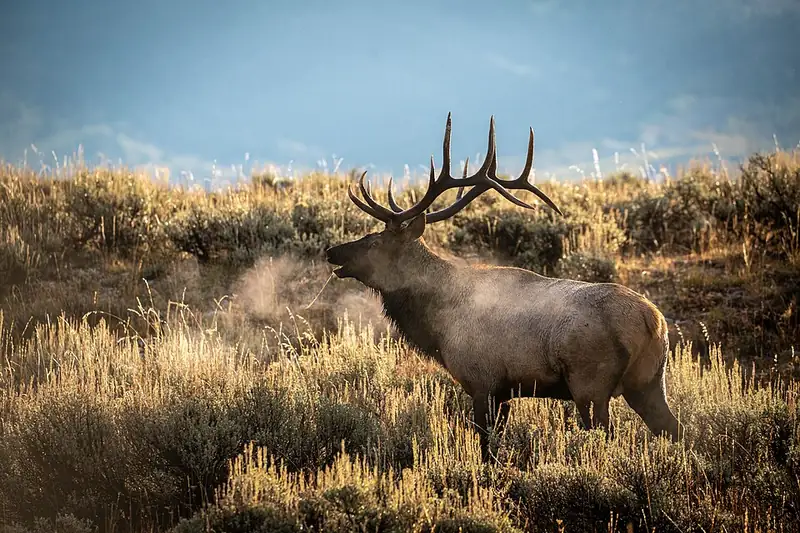
Elk summer high in the park and the mountains around it. As snow deepens from October through December they come down into Jackson Hole, and thousands winter on the National Elk Refuge. In late spring they follow the melting snow line back up.
Photo: chascar / Wikimedia Commons (CC BY 2.0)
Snow that survives the summer is called firn. Firn that lasts several years turns to glacial ice, and once an ice body grows heavy enough it flows downhill under its own weight. There are 11 active glaciers in the park, and the National Park Service says summer melt is now outpacing winter gains, so they are retreating.