Photo cards, one fact each. Big and Little made them.
Card 1 of 6
Photo: lwolfartist / Wikimedia Commons (CC BY 2.0)
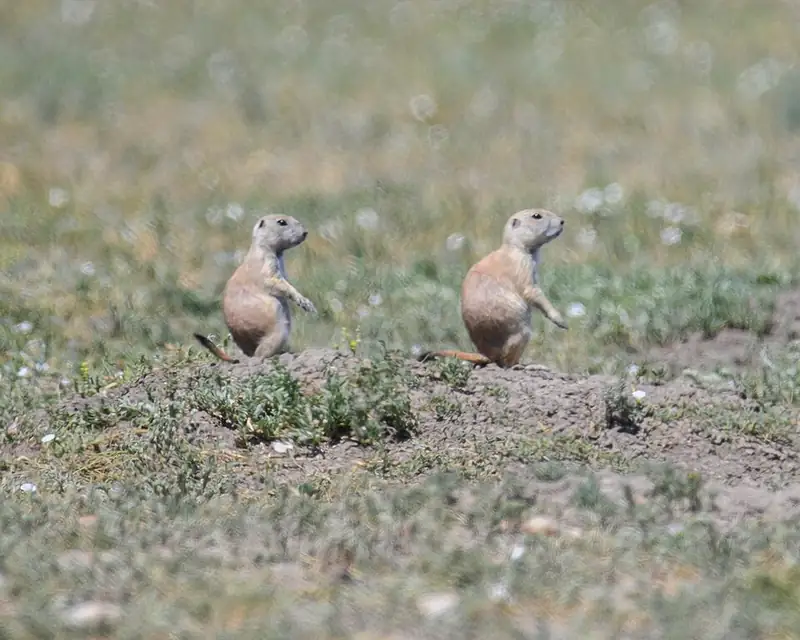
A prairie-dog town is divided into coteries, each about an acre, each with 50 to 60 entrance holes and one family living under it. Their alarm calls carry information: researchers think a call can describe the predator's size, color and speed. They are a keystone species, and the black-footed ferret, one of the most endangered animals in North America, eats almost nothing else.
Photo: Andy Witchger / Wikimedia Commons (CC BY 2.0)
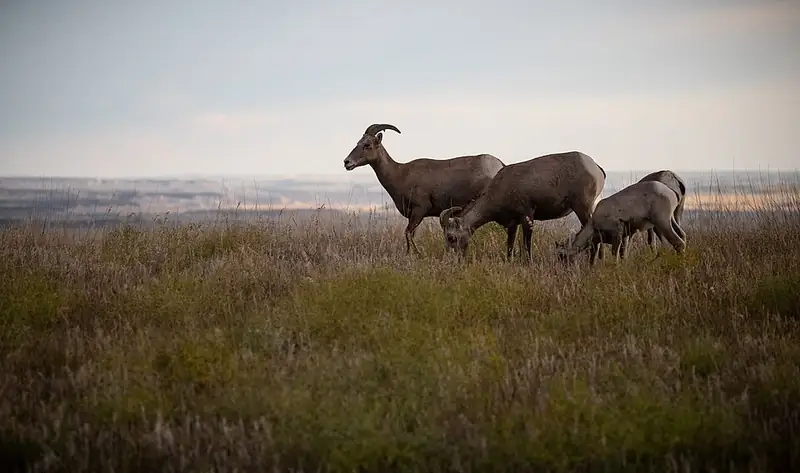
About 250 bighorn sheep live in Badlands, out of roughly 80,000 in the country. None of them are descended from the sheep that lived here originally. Twenty-two were trucked in from Pikes Peak, Colorado, in 1964, and a second group came from Wheeler Peak, New Mexico, in 2004. Look for them on the rock at Pinnacles Overlook and along Castle Trail.
Photo: NPS / Jacob W. Frank (public domain)
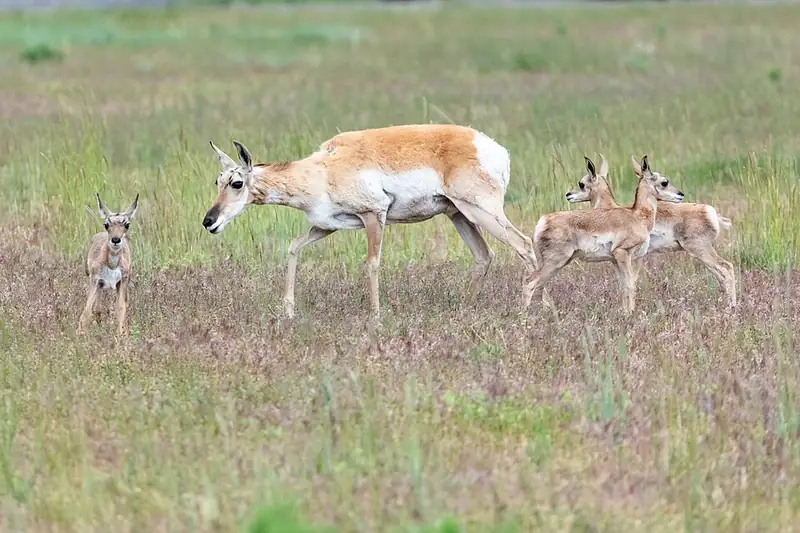
Pronghorn hold 55 miles an hour for half a mile and close to 45 miles an hour for much longer than that. Nothing alive hunts them that fast. Scientists think they were built to outrun the American cheetah, which went extinct here about 12,000 years ago, and they kept the speed. A pronghorn's horn has a bone core that stays put and a keratin sheath that drops off and regrows every year.
Photo: Frank Schulenburg / Wikimedia Commons (CC BY-SA 4.0)
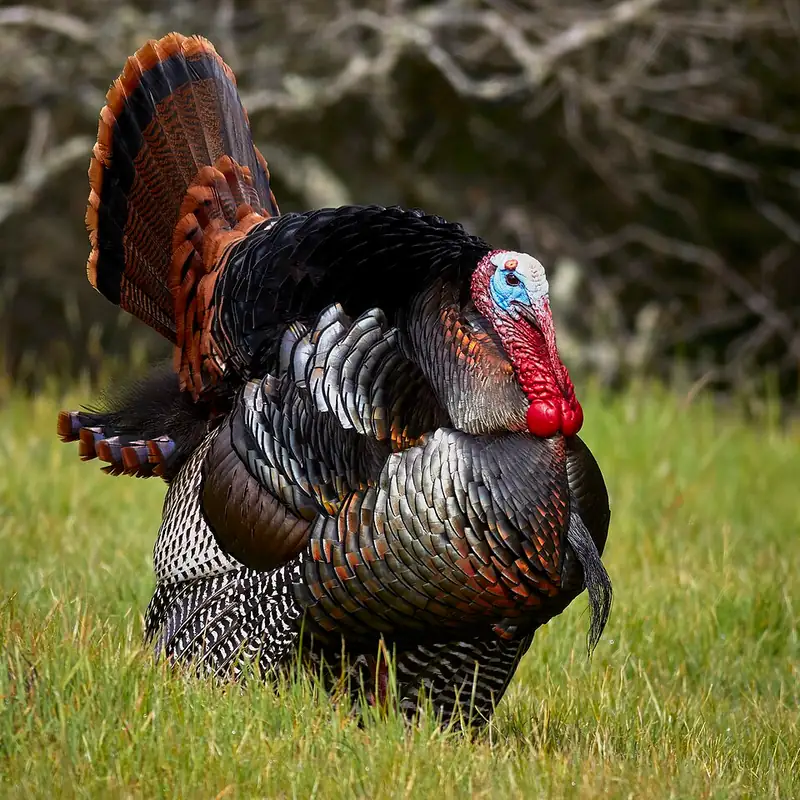
Wild turkeys feed on the ground through the day, on acorns, nuts, seeds, insects, roots and berries, then fly up and roost in a tree at night. They belong to the same family as pheasants, quail and chickens. Benjamin Franklin thought the wild turkey would have made a better national bird than the bald eagle.
Photo: DimiTalen / Wikimedia Commons (CC0)
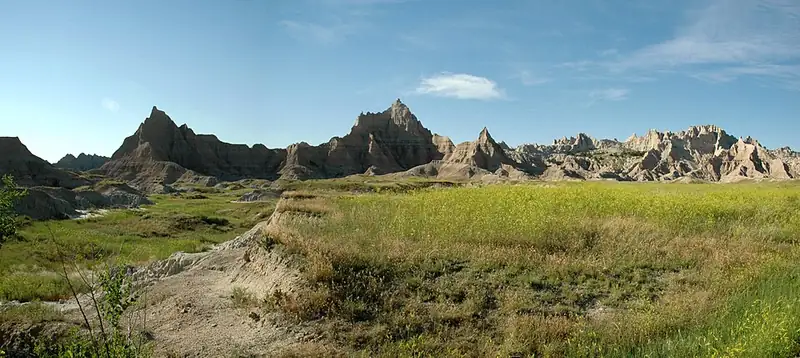
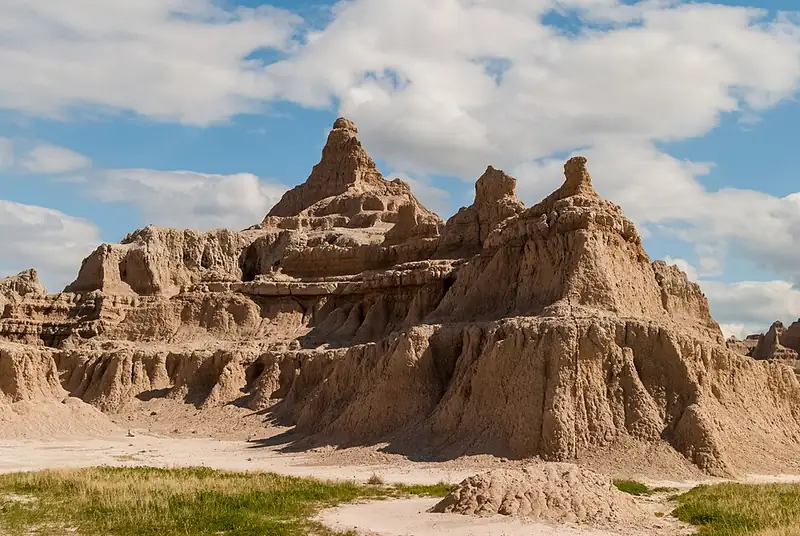
The Lakota have called this country mako sica, bad lands, for hundreds of years. French fur trappers who traveled with them called it les mauvaises terres a traverser, bad lands to travel across. Bad meant hard to get through: the clay goes slick and sticky when it rains, the canyons are a maze, and the water you find is usually muddy and unsafe to drink. In 1922 the proposed name for the new park was Wonderland.
This place is coming apart about an inch a year. The Black Hills granite an hour west erodes an inch every 10,000 years. Every layer you can see took millions of years to stack up and started washing out only about 500,000 years ago, when the Cheyenne and White Rivers cut into it. NPS estimates another 500,000 years and it will be gone.